Who Is John Clauser – One Of The Three Nobel Winning Of Quantum Physics?
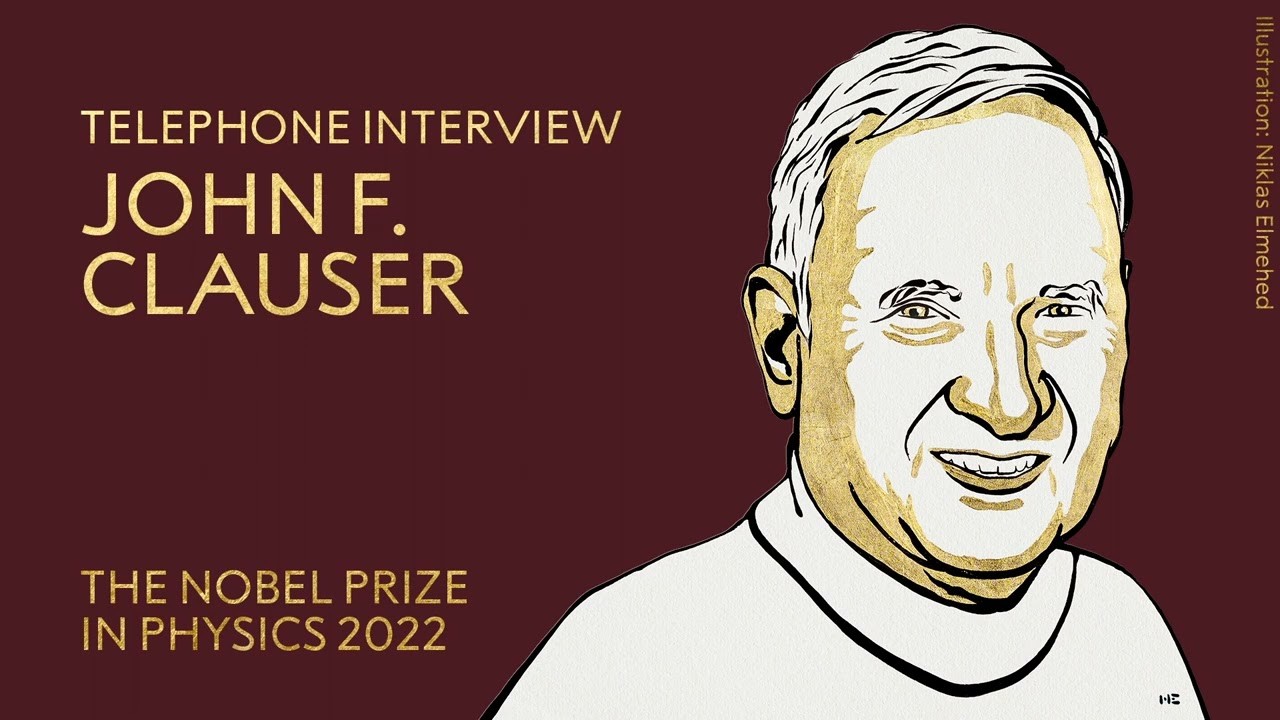
The institute said the scientists had been recognized for “experiments with entangled photons, establishing the violation of Bell inequalities and pioneering quantum information science.”
One hour after he received the phone call, prize co-winner Zeilinger was still in shock.
“It’s a positive shock, I was surprised to get the call,” he said in an interview with the Nobel Prize committee.
“This prize is exciting for the field of quantum mechanics. On the fundamentals, many of the issues about realities and space time are still not answered. I expect some interesting work here in the coming years,” he said.
Work on quantum mechanics a new era for technology
 |
| Photo: Nobel Prize |
The field of quantum mechanics stems from Niels Bohr and Max Planck, the two founding fathers of Quantum Theory.
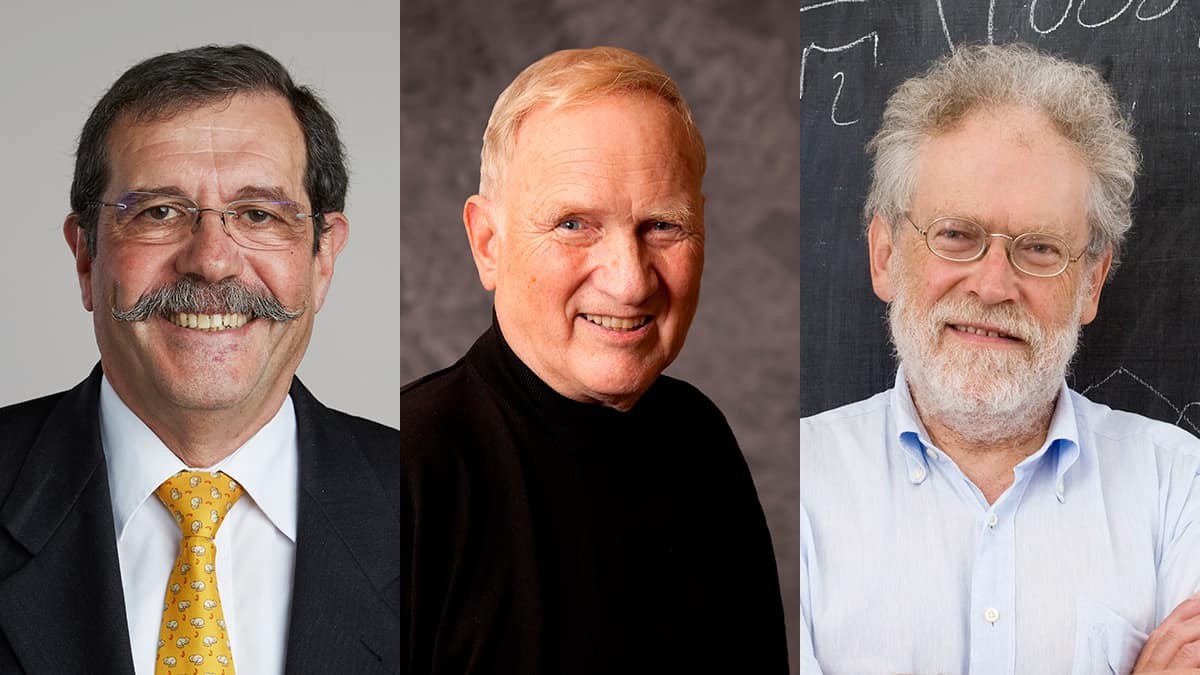
Using groundbreaking experiments, Aspect, Clauser and Zeilinger demonstrated the potential to investigate and control particles that are in entangled states.
Their work on quantum mechanics has helped improve our understanding of how particles behave at the subatomic level.
Quantum physicists have shown that through quantum entanglement, information can be transferred instantaneously over long distances.
They sometimes talk of teleportation, but it’s usually to do with the teleportation of information — it is very unlikely that we will see human teleportation any time soon.
The laureates’ development of experimental tools has also laid the foundation for a new era of quantum technology, including quantum computing.
John Clauser’s biography
 |
| Photo: Reuters |
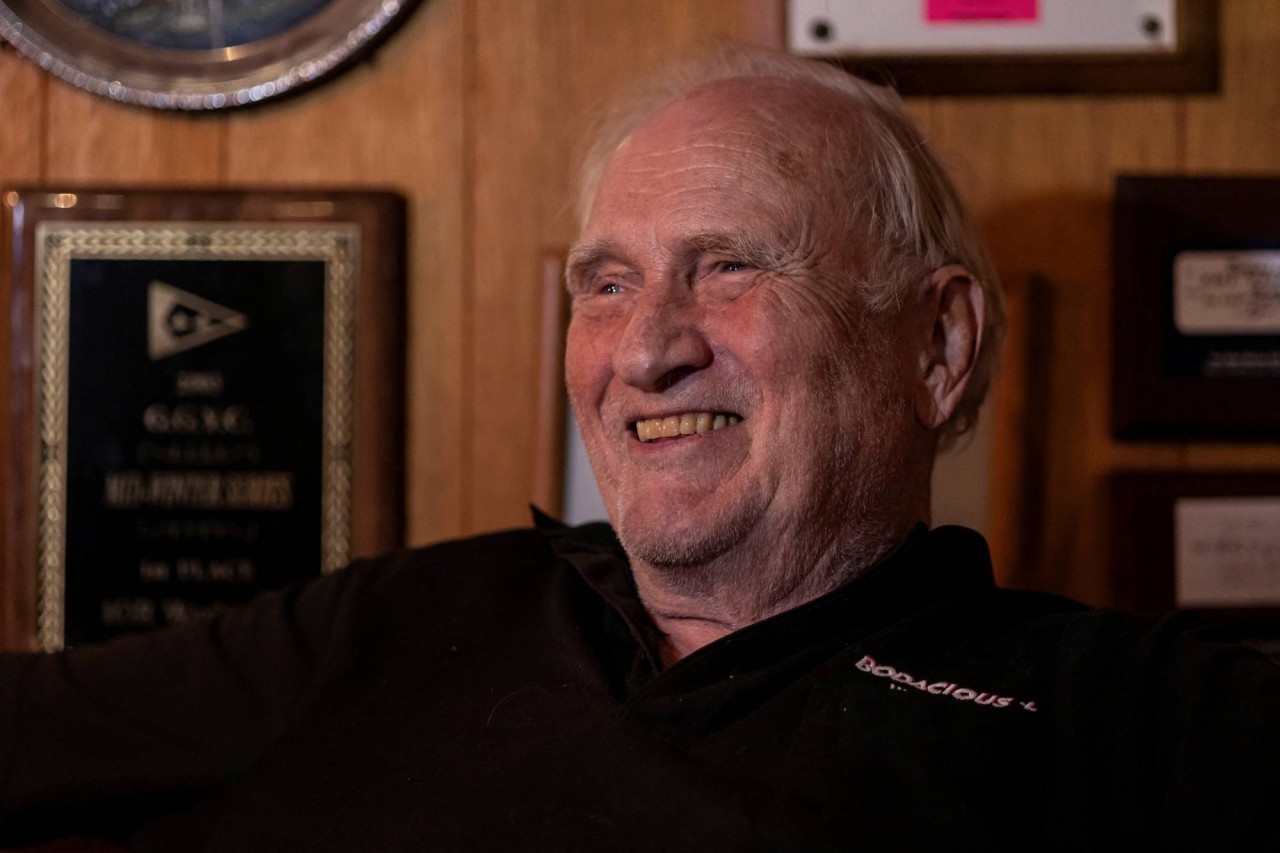
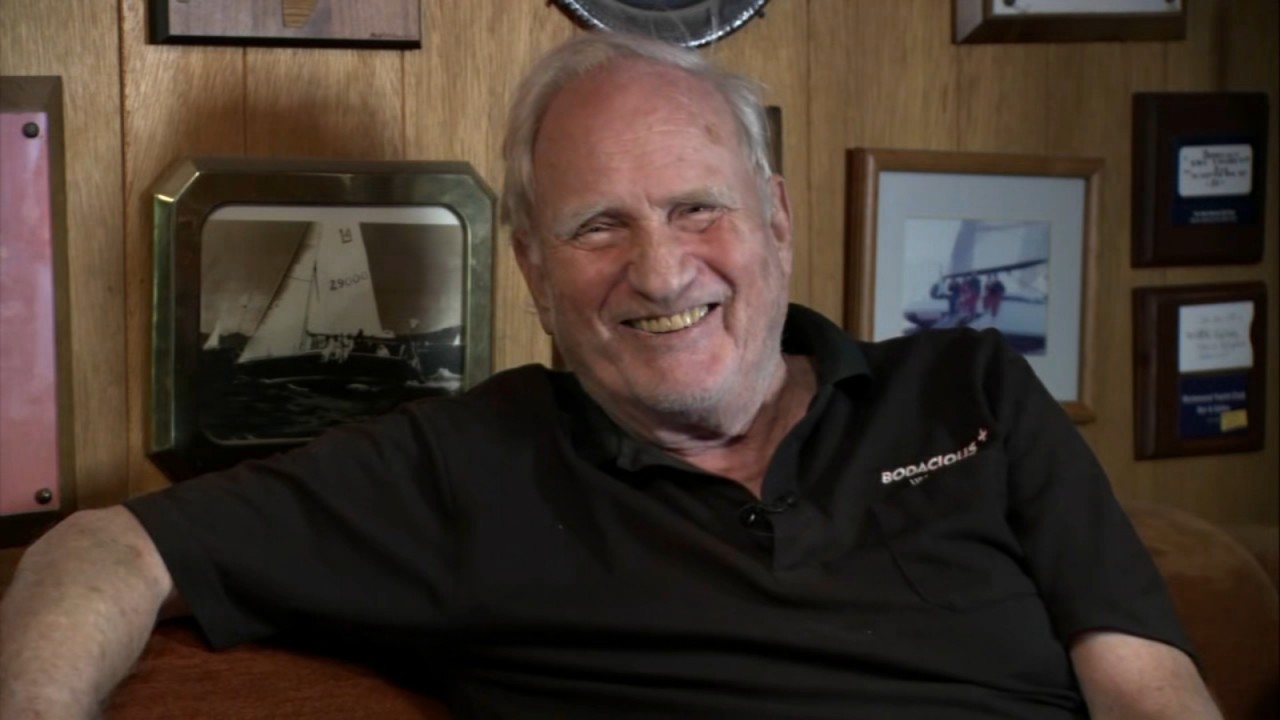
John Francis Clauser (born December 1, 1942) is an American theoretical and experimental physicist known for contributions to the foundations of quantum mechanics, in particular the Clauser–Horne–Shimony–Holt inequality.
Clauser was awarded the 2022 Nobel Prize in Physics, jointly with Alain Aspect and Anton Zeilinger “for experiments with entangled photons, establishing the violation of Bell inequalities and pioneering quantum information science”.
John Clauser received his B.S. in physics from the California Institute of Technology in 1964, his M.A. in physics in 1966 and Ph.D. in physics in 1969 from Columbia University.
 |
| Photo: ABC7 News |
From 1969 to 1996 he worked at Lawrence Berkeley National Laboratory, Lawrence Livermore National Laboratory, and the University of California, Berkeley.
John was awarded the Wolf Prize in Physics in 2010, together with Alain Aspect and Anton Zeilinger for their observations of non-local quantum entanglement and experimental tests of Local Realism.
In 1969, with Michael Horne, Abner Shimony, and Richard Holt, inspired by theoretical results by John Bell, he proposed the first test of local hidden variable theories, and provided the first experimentally testable CHSH-Bell’s Theorem prediction for these theories — the Clauser-Horne-Shimony-Holt (CHSH) inequality.
In 1972, working with Stuart Freedman, he carried out the first experimental test of the CHSH inequality’s prediction. This was the world’s first observation of non-local quantum entanglement, and was the first experimental observation of a violation of a Bell inequality.
 |
| Photo: BSS |
In 1976 he carried out the world’s second experimental test of the CHSH inequality prediction.
In 1974, working with Michael Horne, he formulated the theory of Local Realism as a generalization of local hidden-variable theories, and first showed that a generalization of Bell’s Theorem provides severe constraints for all Local Realistic theories of nature. That work introduced the Clauser–Horne (CH) inequality as the first fully general experimental requirement set by Local Realism. It has only recently (2013) been tested experimentally. He also introduced the “CH no-enhancement assumption”, whereupon the CH inequality reduces to the CHSH inequality, and whereupon associated experimental tests also constrain Local Realism.
 |
| Photo: Physics World |
In 1974 he made the first observation of sub-Poissonian statistics for light (via a violation of the Cauchy–Schwarz inequality for classical electromagnetic fields), and thereby first experimentally proved that photons can behave like localized particles and not like brief pulses of electromagnetic radiation. In 1987-1991 he proposed (and patented) atom interferometers as useful ultra-sensitive inertial and gravity sensors. In 1992, with Matthias Reinsch, he first deduced the number-theoretic properties of the fractional Talbot effect, and invented the Talbot-Lau interferometer.
In 1990-1997, with Shifang Li, he first used Talbot-Lau interferometry to build an atom interferometer. In 1998 he invented and patented use of the Talbot-Lau interferometry for “Ultrahigh Resolution Interferometric X-ray Imaging”. This invention, in turn, allows x-ray phase-contrast medical imaging of soft tissue.
The post Who Is John Clauser – One Of The Three Nobel Winning Of Quantum Physics? appeared first on Vietexplorer.com.
View more from VietExplorer:
Number of tourists during Tet holiday surgesWatkins hat-trick leads Villa’s 7-2 rout of champions Liverpool
Blooming buckwheat flowers bring lively color to Ha Giang
Ca Mau’s 150-hectare mangrove forest to be replanted
AIPA 41 takes place successfully
Vietjet re-operates international commercial flights from Vietnam to South Korea
Vietnam considers opening inbound tourism
Rowers conquer Tu San canyon
Storm Saudel to head to central provinces of Vietnam
Explore new community-based tourism in Tra Vinh
German photographer’s exhibition a snapshot of Hanoi from 1967 to 1975
Global Supply Chain Shifting to Vietnam Creates Boomtowns in Rural Area
Top gambling cities in the world
Insider’s view: A day in the Life of a Entrepreneur living in Vietnam
Vietnamese TikToker becomes a craze by staring at the camera
Photo of Covid lockdown in Hanoi wins int’l award
Unprecedented landslide may become more serious amid continuing downpours
Ninh Binh evacuates dozens of households due to threat of landslides
Around 340 Vietnamese citizens repatriate home from 30 countries
Vietjet donates 10,000 VND for every ticket sold to support residents in flood-affected areas


Comments
Post a Comment